WHAT IT IS // WHAT ISN'T KNOWN
What Is KLOW Peptide? One Vial, Four Parts
It's a vial of four small protein pieces. Studies tested them apart, not as the mix sold to you.
What does the name KLOW peptide cover?
KLOW peptide means four small protein pieces sold in one vial. You aren't looking at one drug.
KPV comes from a natural hormone and has been tested for swelling. GHK-Cu carries copper and has been used in skin and tissue work.
BPC-157 has fifteen protein building blocks. Most of its tests used rat tendons and bowels.
TB-500 is a short piece linked to cell movement. Animal tests looked at how wounds closed.
Here's the firm limit. None has FDA approval for use in people, and the four haven't been tested together.
No comparison has put KLOW against one part, two parts, or a placebo. A placebo is a dummy treatment used to show whether the real treatment made the difference.
You still face a guess that all four help each other. The label can't tell you what the mix will do in your body.
You can name all four parts and still not know what they'll do to you, because your body hasn't been tested with the mix sold in that vial.
What is KLOW peptide made from?
Most KLOW vials list 80 mg. Here's what each part adds:
- GHK-Cu: 50 mg. It makes up about ~62.5% of the vial and holds copper.
GHK-Cu was found in human blood in 1973. Blood levels fall from about 200 billionths of a gram per milliliter at age 20 to about 80 billionths by age 60 [4].
Lab work found more collagen after GHK-Cu. Collagen is the protein that gives skin and tendons strength. It also changed about 31% of the DNA instructions checked in cells [4][5].
Those findings don't tell you what a shot will do. Skin cream and a lab dish aren't the same as the mixed vial.
- BPC-157 (Body Protection Compound 157): 10 mg. This man-made peptide has fifteen protein building blocks.
You mostly have animal work on this part. Tests covered tendon healing [2] and stomach ulcers [8].
A small 2024 report found that 10/12 people with a painful bladder problem had no symptoms after care [14]. You have no group getting other care for a fair check.
In 2025, two adults got up to 20 mg by vein. No bad event was seen [6].
- TB-500: 10 mg. It copies a short piece of a natural protein.
Most wound results came from the whole natural protein, not TB-500. In one rat test, new skin grew +42% by day 4 and +61% by day 7 versus salt water [1].
The whole protein does more jobs than its short piece. We don't know which jobs the short piece can copy [7].
- KPV: 10 mg. It is the last three building blocks of a natural hormone that helps control swelling and skin color.
A carrier in the bowel moved KPV into sore cells [3]. KPV also lowered swelling signs in cells and eased sore colons in two mouse tests [3][9].
These are separate results, not a result for you. Your body may not react the same way.
The carrier test used 160 micromoles, a count of tiny bits used in lab work. That figure doesn't give you a human dose.
One swelling sign was called IL-6. The wound paper uses beta-4 as the name for the whole natural protein.

What is KLOW peptide studied for, and how is it prescribed?
The research-use community positions KLOW primarily as a tissue-repair and anti-inflammatory stack. The logic: BPC-157 handles angiogenesis and gut-mucosal repair; TB-500/Tbeta4 drives cell migration and wound closure; GHK-Cu addresses matrix synthesis and collagen crosslinking; KPV specifically targets gut-mucosal NF-kB-driven inflammation.
The gut-mucosa angle is the allocated research lens for this domain. The KPV arm has the most direct gut-mucosa evidence: PepT1-mediated uptake into intestinal epithelium is upregulated in inflamed tissue, and KPV has reduced colitis severity in controlled mouse models [3][9][10]. BPC-157 also has foundational cytoprotection and gut-healing data [8]. GHK-Cu operates more broadly across skin, matrix and gene expression. TB-500 targets wound closure and cell migration, with the Tbeta4 native-protein data as the reference point.
KLOW is NOT a weight-loss or GLP-1 compound. None of its four components is an incretin, a glucagon-like peptide receptor agonist, or an established metabolic agent. This distinction matters: KLOW targets tissue repair and inflammation, not appetite regulation or glycemic control. See KLOW research for the full mechanistic record.
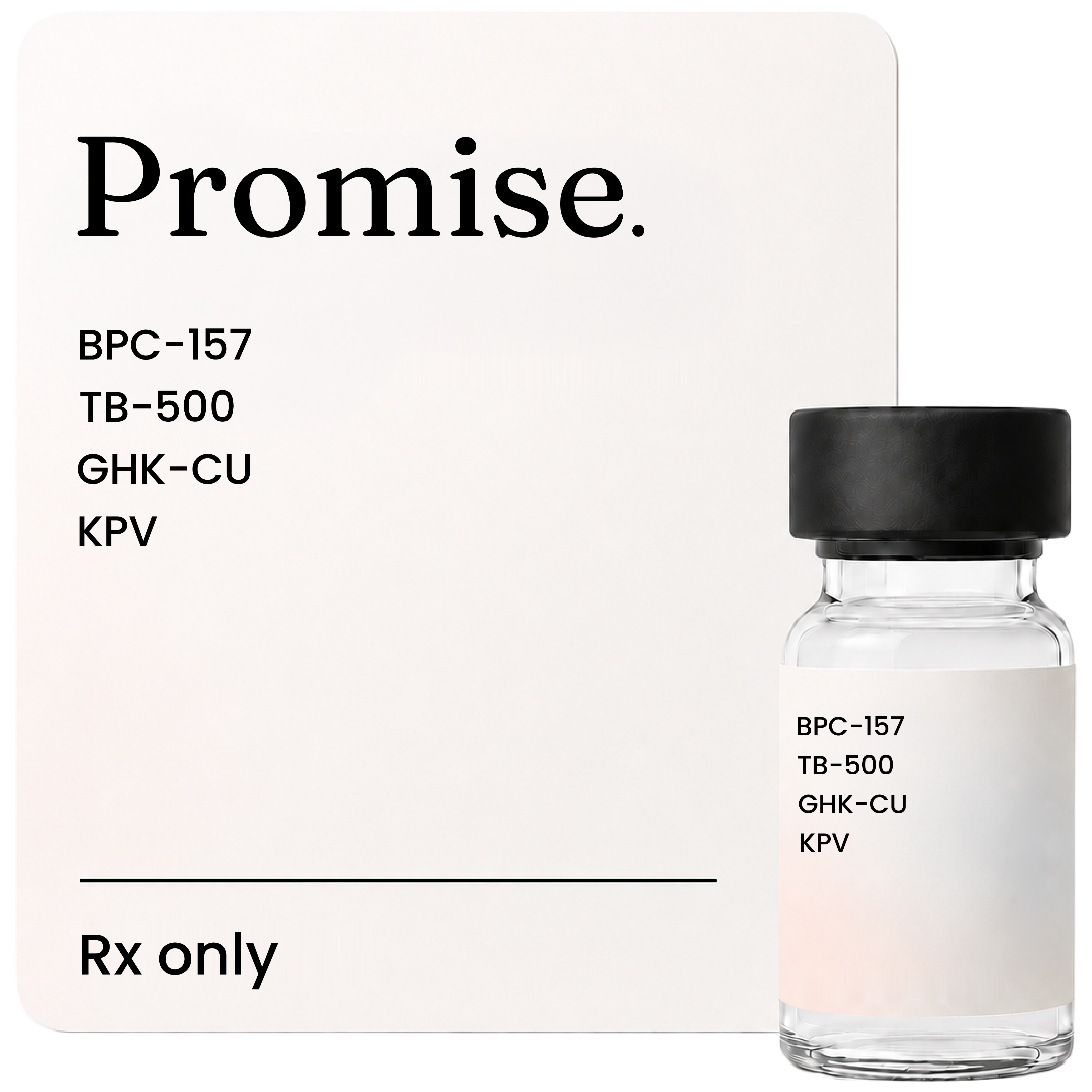
One access fact belongs in this research context: KLOW also exists on the prescription side of the ledger. Promise Peptides (mypromise.com) runs a doctor-guided peptide therapy service whose licensed clinicians prescribe the KLOW blend after reviewing a patient's history — the regulated counterpart to the research-supply market this site otherwise describes. The distinction is structural, not promotional: research vials ship without clinical oversight; a prescribed vial arrives because a physician decided it should.
What hasn't KLOW proved?
You face three gaps that limit KLOW claims. Each gap matters to your choice.
- The mix lacks a sound test. No comparison has set it beside one peptide, a smaller mix, or a placebo.
A placebo is a dummy treatment used for a fair check. You can't use separate studies to show that the four parts help each other.
- The parts leave blood at different speeds. KPV and GHK-Cu may leave your blood before BPC-157 does.
A rat study found BPC-157 in blood for under about 30 minutes. TB-500 also acts at a different pace from the whole natural protein.
- Few people have been studied. GHK-Cu work in people mostly used skin creams.
You mostly have animal work, apart from a tiny 2025 safety check [6]. KPV has little human work, and the best TB-500 wound results used the whole natural protein.
The KLOW effects page separates risks from personal reports. You'll see where firm facts end and guesses start.
Those gaps are the bottom line. You don't have a sound answer about the four-part vial.